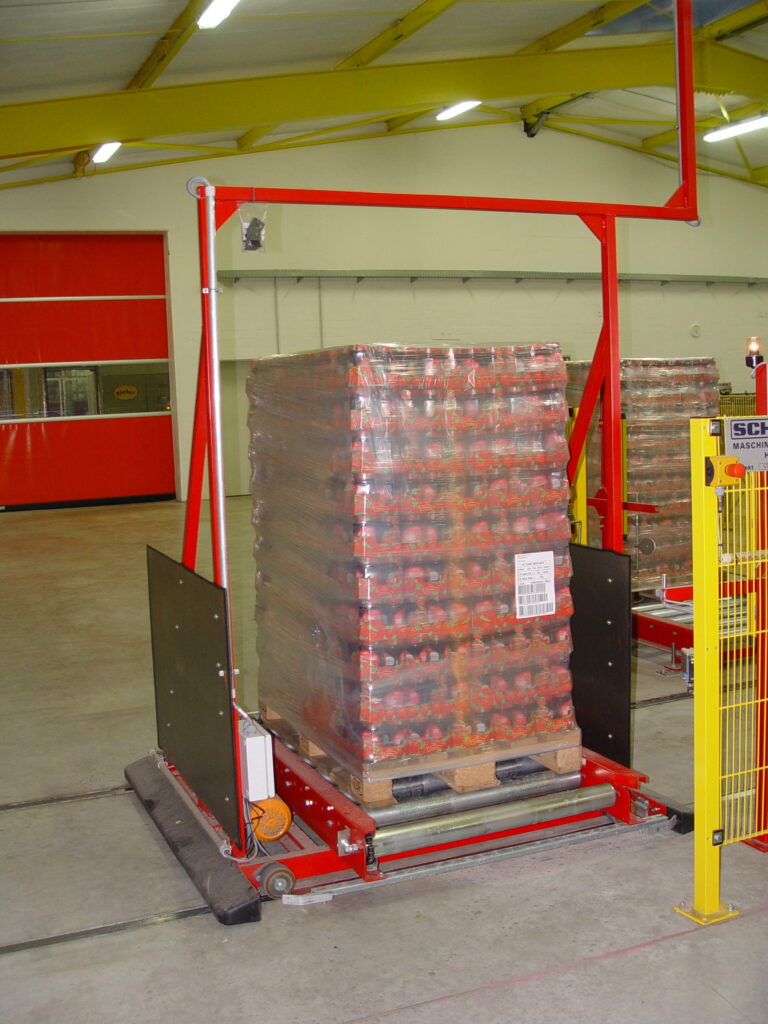
The horizontal transport of goods is typically carried out using roller or chain conveyors of various designs. However, if longer distances need to be covered with lower conveying capacity, or if a permanently installed system cannot or should not be implemented, then transfer cars are a suitable option.
In addition to our continuous conveyors (roller, chain, and belt conveyors), we regularly use transfer cars for the horizontal transport of general cargo.
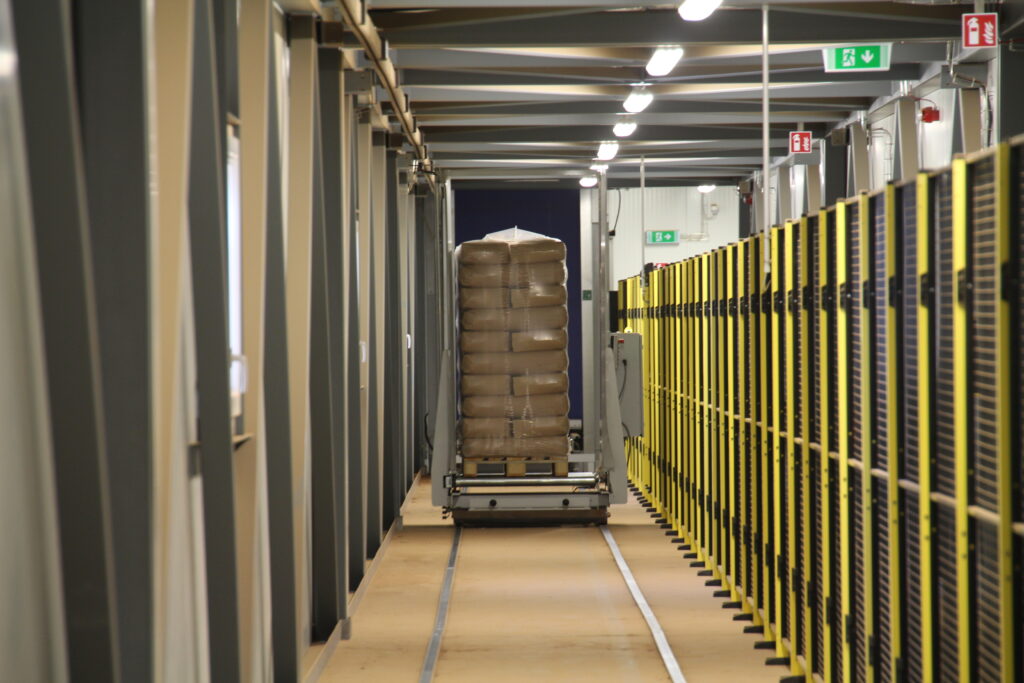
In many cases, a transfer cart offers sufficient performance while requiring significantly lower capital costs compared to continuous conveyors. Due to the diverse requirements and applications of this highly flexible component, we have developed and implemented a wide variety of different designs. Transfer cars are typically rail-guided and transport the loaded general cargo either further along the previous direction of transport or across it, thereby enabling…
Covering longer distances quickly
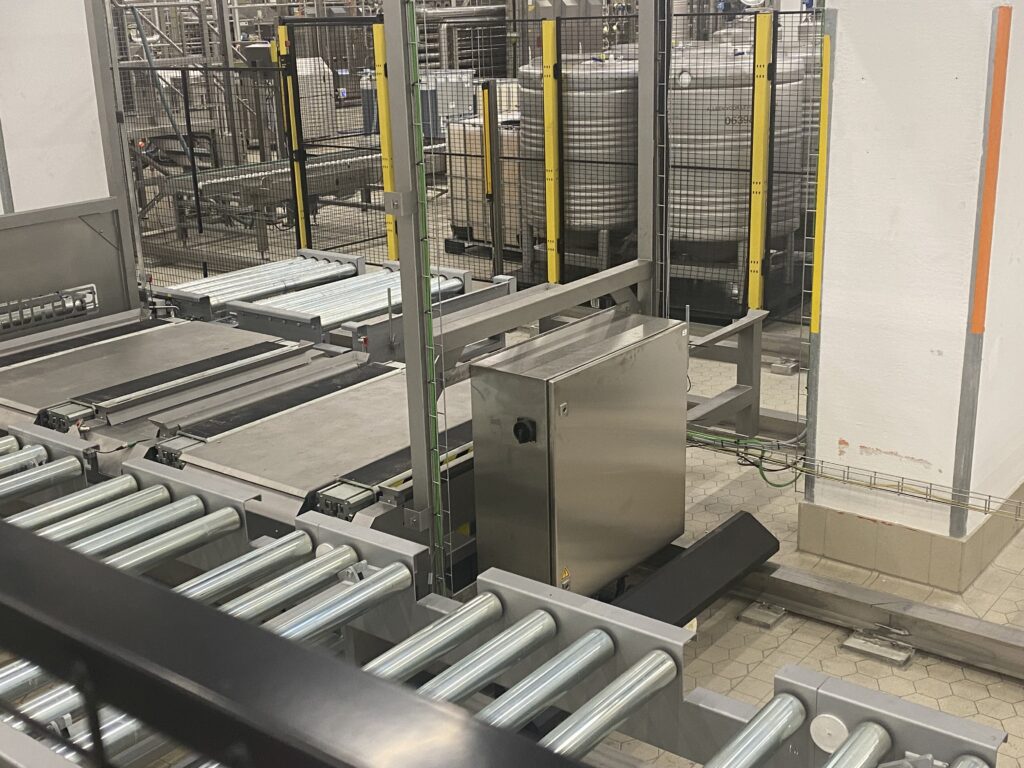
Distributing a flow of goods to multiple destinations
Combining multiple product flows
Allow/maintain paths for staff or forklifts that cross the flow of goods
To save costs
Variants
Depending on the task, the environment, and the goods being transported, there are many different solutions and designs for various conveyor systems.
Here are just a few notable features:
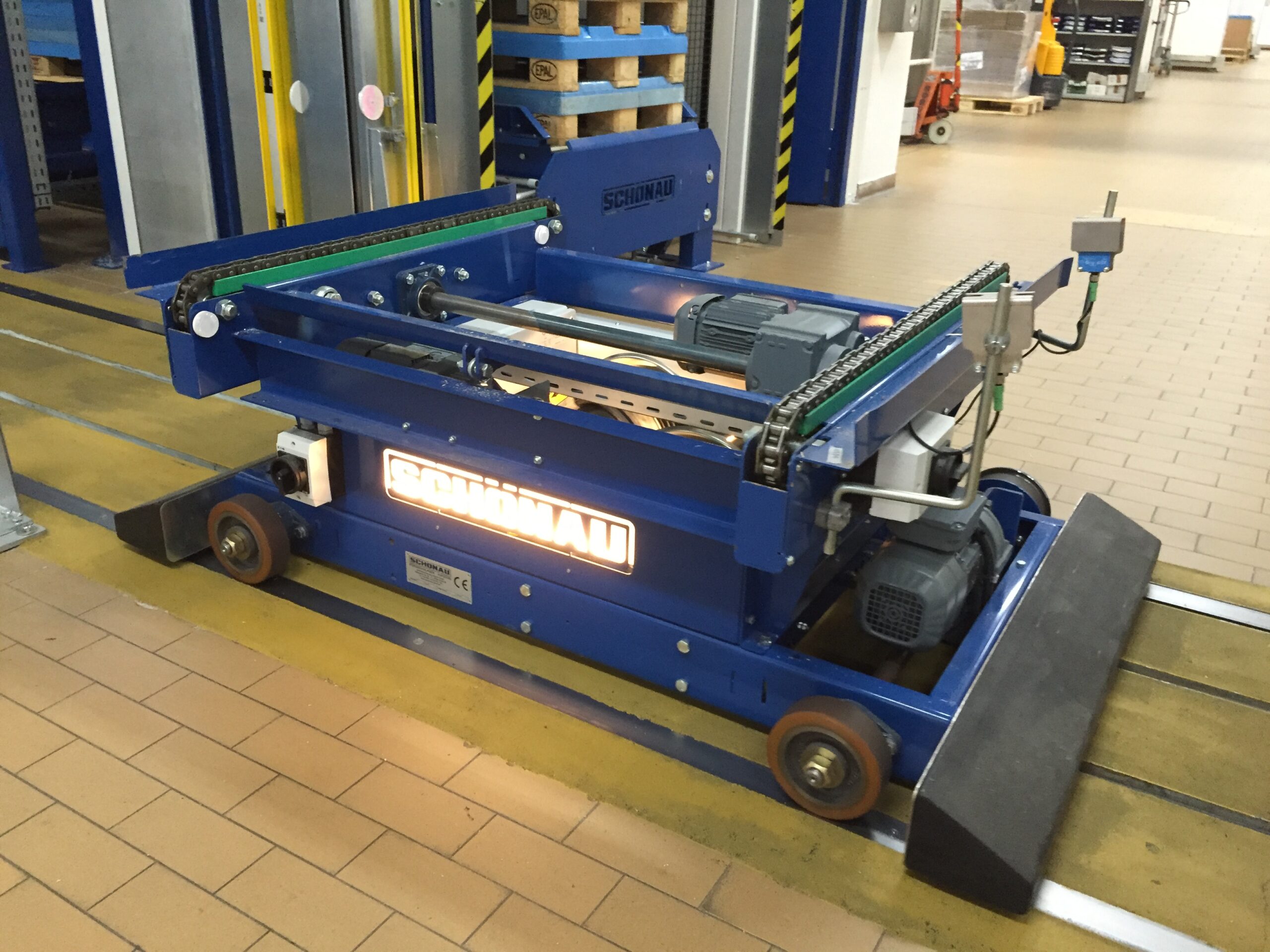
extra-flat, double-depth or double-width, two levels, capable of navigating curves, with a lifting mechanism, with a rotating mechanism, telescopic forks, and much more.
Depending on the application, the transfer carts can be equipped with one or more components from our conveyor technology lineup (roller, chain, belt, and V-belt conveyors).
Drive Options
Depending on the requirements, different drive types may be used, such as:
Ω-drive. A drive unit mounted on the carriage pulls the carriage along a load-bearing element (chain, flat belt, or toothed belt) laid on the floor.
Single-axis or multi-axis drive. Two or more rollers on the travel carriage drive it via a central drive located on the travel carriage.
Friction wheel drive. A drive unit mounted on the carriage drives the carriage via a spring-loaded friction wheel.
External drive: A stationary drive moves the carriage along a circulating load-bearing element (cable, chain, belt
The drives used range from standard gearmotors—from very simple models to pole-changing types (2 fixed speeds) and frequency-controlled types (variable speed)—to dynamic servomotors.
Safety
Unless the transport carts are operated in an area where no people are present, a wide range of safety components—such as bumpers, laser fan scanners, safety light curtains, etc.—offers various possible solutions.